
⏱️ Reading time: 7 minutes
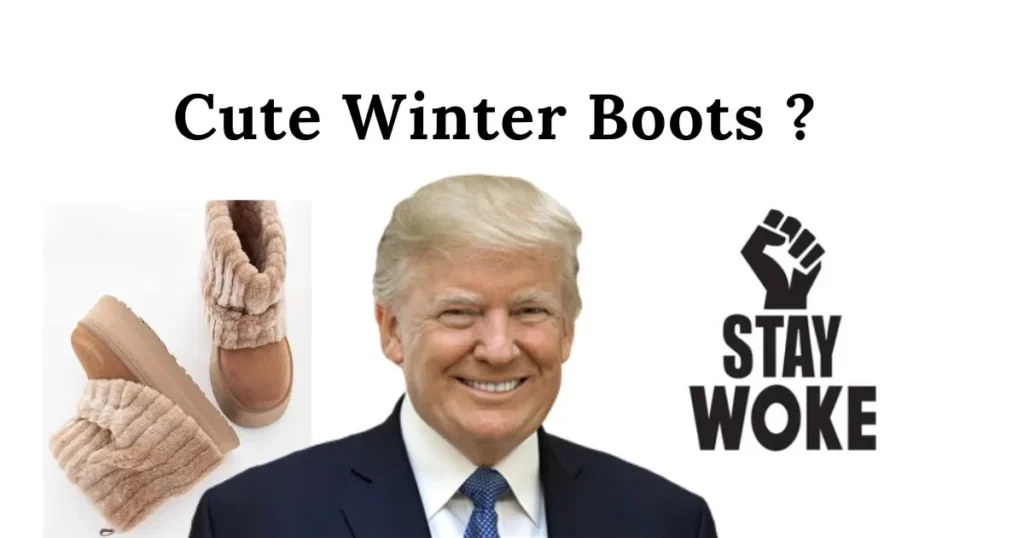
“Cute winter boots” is a code phrase that appeared on TikTok around January 23, 2025, three days after Donald Trump’s inauguration. Boots protect you from ice, and ICE is US Immigration and Customs Enforcement, the agency in charge of immigration arrests and deportations. Creators talked about boots to share advice about raids while hoping to dodge any quiet throttling by the algorithm. Here is where it came from, how it worked, the criticism and what has happened since. And if your reach looks abnormally low, a boost in TikTok views can help restart a video.
Where does “cute winter boots” come from?
Go back to the week of January 18, 2025. On the evening of the 18th, TikTok went dark in the United States under the law requiring the sale of its US business. The app came back on the 19th after roughly 14 hours offline, and Donald Trump was inaugurated on the 20th. In the days that followed, many users said their videos criticizing the new administration or discussing immigration were reaching far fewer people than before.
On January 25, journalist Taylor Lorenz (User Mag) wrote that thousands of users had spent the previous 48 hours posting videos “about cute winter boots”. The Daily Dot (January 27) named @mirandathedemon and @watchout4audrey among the early accounts. The video below is from January 24: no explicit information, just a call to “get on board with these cute winter boots”, the hashtag #catchingfire (the second Hunger Games film) and Peter McPoland’s “Digital Silence”.
@eryn.spamz everyone should get on board with these cute winter boots! 💙 #cutewinterboots #winterboots #catchingfire #fyp
The first version of this article, in February 2025, described the trend as a general symbol of the American left and never explained the ICE wordplay. That missed the point.
How does the code work?
It’s a form of “algospeak”: swapping words you think are monitored for harmless ones. Here, “winter boots” stands in for “protection from ICE”. You also see “ice cream” or “ice cream trucks” for agents and their vehicles (The Mary Sue, January 29, 2025).
In practice, three formats existed side by side:
- The creator talks about boots out loud while on-screen text, or a sign, gives the real information: rights during a stop, legal aid numbers, reports of raids.
- The video simply replaces sensitive words with “cute winter boots” in a political speech.
- The video contains nothing explicit, just a protest-flavored sound, a hashtag, an allusion, like the one below from January 28: “just some light research regarding cute winter boots, unrelated to anything”.
@mrs.frazzled Just some light research regarding cute winter boots…unrelated to anything….
A theory also went around that TikTok’s algorithm favors videos about a product you can buy. “What the algorithm likes is products,” one creator told the Daily Dot. Nothing confirmed it, but the idea explains why the chosen object was a pair of boots rather than any random word.
Why did creators code their videos?
Because they feared being held back. After the app returned on January 19, with a welcome message thanking President Trump, many users felt that some topics were not getting through. TikTok never announced any such policy, and from the outside it is impossible to prove that a video was deliberately limited.
The code also had a community effect. Those in the know recognized each other, others were left puzzled, and the mystery drove people to comment asking what it meant. Every comment pushed the video up.
Criticism came fast. Rolling Stone ran a piece in late January 2025 about the “limits of activism”: many of the videos contained no useful information at all, just soundtracks from revolutionary films and musicals (The Hunger Games, Cabaret, Les Misérables). The code ended up drowning out the few videos that actually helped.
What has happened since?
The censorship question came back a year later. In January 2026, a majority American-owned joint venture that includes Oracle took control of TikTok’s US operations. Non-Chinese investors own about 80%, with ByteDance keeping the rest (CNN, January 26, 2026).
A few days later, users said their videos about ICE operations in Minneapolis would not publish or sat at zero views. TikTok blamed the problems on a power outage at a US data center, “unrelated” to the change in ownership. California Governor Gavin Newsom announced a review of the platform’s moderation practices (CNBC and The Washington Post, January 26 and 27, 2026). As far as we know, no public findings had been released as of September 2026.
In the coverage of that episode, we found no notable comeback of the “cute winter boots” code itself. Creators mostly talked about censorship directly, with screenshots as evidence.
Can a brand jump on it?
No, and that’s the honest answer. A shoe brand posting “our cute winter boots” to ride the code would look opportunistic on a topic tied to real deportations. The backlash would come from both sides.
What a brand can take away is the underlying lesson: on TikTok, an everyday object can carry a much bigger message. For a creator or a small business, building a loyal audience that gets your references beats chasing the code of the moment. A base of engaged TikTok followers gives you steadier starting reach.
Has your TikTok reach collapsed?
When a video is stuck at a few hundred views, a boost in views helps it get back into the For You feed and reach your audience.
FAQ
What does “cute winter boots” mean on TikTok? meaning
When did the cute winter boots trend start? date
Was TikTok really censoring anti-Trump videos? censorship
Why was the trend criticized? criticism
What is the cute winter boots sound? sound
Our TikTok offers
-
TikTok
Buy Tiktok Followers
Price range: 2,90 € through 999,90 € View offers This product has multiple variants. The options may be chosen on the product page -
TikTok
Buy TikTok likes
Price range: 3,90 € through 1999,90 € View offers This product has multiple variants. The options may be chosen on the product page -
TikTok
Buy Tiktok Shares
Price range: 5,90 € through 6999,90 € View offers This product has multiple variants. The options may be chosen on the product page -
TikTok
Buy TikTok views
Price range: 2,90 € through 794,90 € View offers This product has multiple variants. The options may be chosen on the product page


How do you read and use this kind of code?